I recently read, in a very interesting and entertaining book entitled “The World for Sale: Money, Power, and the Traders Who Barter the Earth's Resources”, a reflection that goes beyond the mere need for essential raw materials. According to the authors, Javier Blas and Jack Farchy, both Bloomberg journalists specialised in the energy and commodities sectors, “the world is changing, but trade in natural resources remains essential. Commodities continue to be a sure-fire way to gain money and power. The enormous influence that those who trade in them wield in international affairs is not going to disappear any time soon. However, after decades in the shadows, it is now impossible to ignore their influence”.
Indeed, over several decades we have been building an economy in which we have placed our trust in global supply chains, whereby third countries with lower production costs supplied us with a large proportion of the raw materials, intermediate goods and finished products we required. Gradually, our country became deindustrialised (industrial GDP in Spain fell from 19.5% at the start of the century to 11.8% in 2025; in the Basque Country, from 28.7% to 20.9%) because it was cheaper to buy from other countries. However, this process is not unique to our economy; it has become widespread across Europe and other regions.
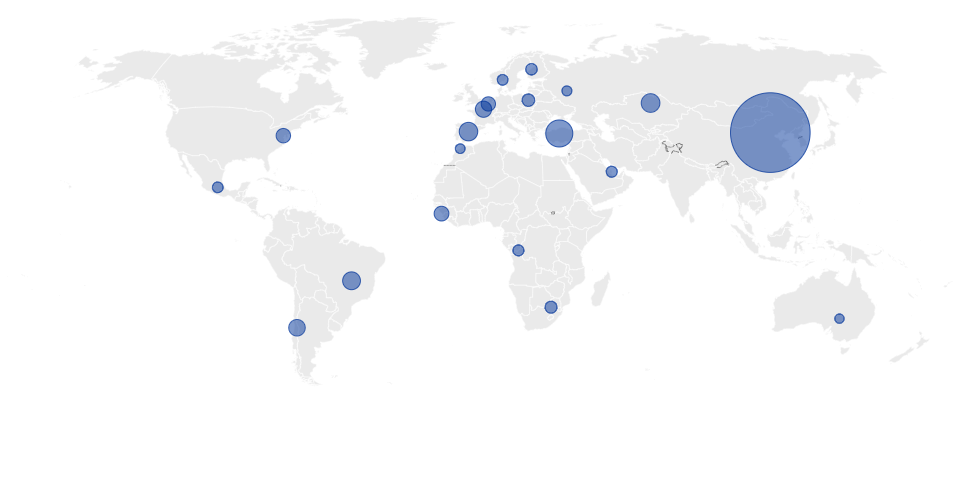
The context of the COVID-19 pandemic, armed conflicts around the world (for example, those involving Russia and Ukraine, Israel and Palestine, or Taiwan), logistical chain disruptions due to geographical factors (for example, the blockage of the Suez Canal or, more recently, cost increases at the Panama Canal) and geopolitical tensions (for example, new Chinese restrictions) highlight the vulnerability arising from excessive dependence on imports from other economies, and in particular from China.
For critical raw materials for the energy transition and digitalisation, the situation is no different. High dependence on certain raw materials and specific sources affects project progress. Whilst disruptions to the supply of these raw materials do not bring existing infrastructure to a standstill, they do limit the ability to make progress towards decarbonisation and digitalisation targets. This indirectly affects the competitiveness, economic security and strategic autonomy of the European Union (EU) and Spain.
Map 1. Main suppliers of critical raw materials to the EU
Source: Critical raw materials explained - Consilium
In this regard, together with my colleague Stephanía Mosquera López, we have contributed a chapter to the book “The Impact of the Energy Transition from a Gender Perspective”, entitled “Critical Raw Materials in the EU: From Extreme Dependence to Strategic Projects”.
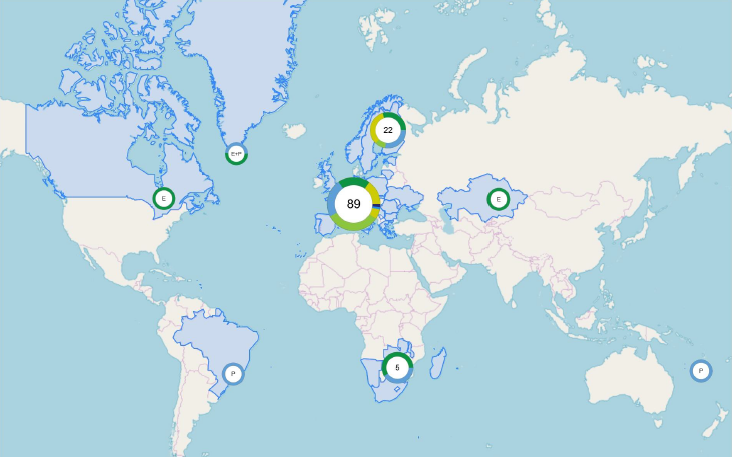
In this chapter, we assessed our dependence on 25 critical raw materials and 4 key metals, as well as the concentration of that dependence on a single supplier. The results were not particularly encouraging. In this regard, the European Union (EU), through the Critical Raw Materials Act, proposed the creation of a Raw Materials Club comprising like-minded countries that also seek to reinforce global supply chains, strengthen the World Trade Organisation (WTO), expand their network of sustainable investment and free trade agreements, and combat unfair trade practices. It also proposed developing strategic projects (with a significant presence in the EU and other countries) to strengthen the EU’s supply chains and diversify sources of critical raw materials.
Map 2. EU strategic projects
Source: Selected strategic projects under CRMA
In September this year, we also published, together with our coordinator of Orkestra’s Energy and Environment Lab, Jorge Fernández Gómez, the article “The challenge of supplying critical raw materials” in the Geological and Mining Bulletin of the CSIC (Spanish National Research Council). This article focuses on strategies companies can adopt to reduce the risks associated with raw material supply. These strategies can be classified into seven groups: (i) innovation; (ii) advanced manufacturing; (iii) reuse and recycling; (iv) domestic mining and metallurgy; (v) procurement and other business measures; (vi) national strategies and planning; and (vii) cooperation. Each strategy has advantages and disadvantages, and each faces challenges. In any case, none of them can, on its own, eliminate all the risks associated with supply.
Reflecting on these two studies, they converge on a common point: the need for cooperation. Indeed, the first paper highlights the risk of over-reliance (more than 65% from a single territory for a given critical raw material) and establishes the need to develop a strategy to diversify sources and collaborate with like-minded countries (e.g., the aforementioned Club). The second paper presents collaboration as a strategy for reducing supply risks. In this case, it is pointed out that reaching a global agreement on raw-material supply, based on the United Nations’ Sustainable Development Goals (SDGs), could help stabilise the supply of the raw materials needed to decarbonise economies and achieve the transition to net-zero emissions.
In this context, as many studies note, the concept of “coopetition” emerges, whereby competitors sometimes cooperate or collaborate to achieve specific objectives that would otherwise be difficult to attain. This is not unique to the raw materials sector. It also occurs in the port sector, in electricity grids, and in many other sectors. However, given that various lines of research converge on the same point, it is essential to reflect on and explore this subject in greater depth. Therefore, and bearing in mind the points raised by Javier Blas and Jack Farchy, we are at a favourable juncture to make progress in this area of research.