One of the working groups that participated in the Asett Forum (International Social Economy Forum) reflected on and contributed to the discussion of the impact of the Social Economy on society: how that impact manifests itself, how it can be measured, the barriers and enabling factors involved, and its recognition. Beyond the academic interest in this topic, it is worth asking what the underlying reasons are for Social Economy enterprises to devote resources to measuring their impact on society.
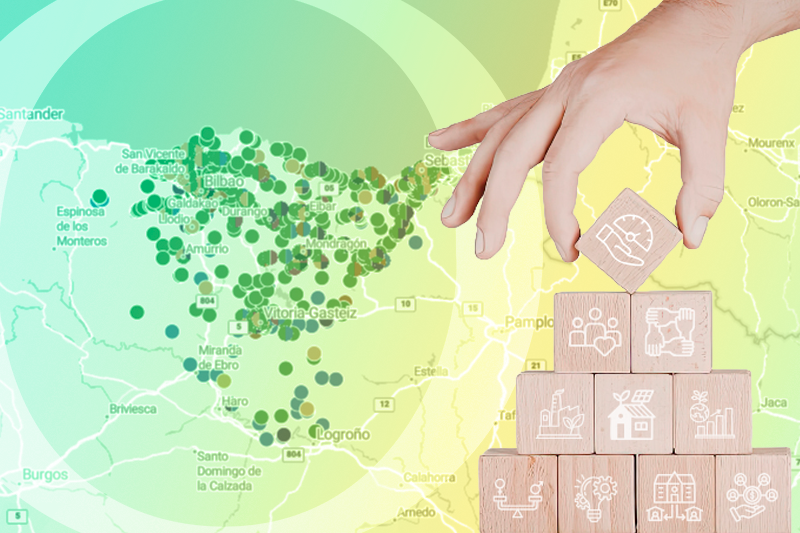
Orkestra, in collaboration with Kooperatiben Kontseilua, has carried out work in recent years aimed at developing KoopBehatokia to measure the impact of cooperatives on society. Cooperatives account for 55% of the number of Social Economy enterprises, 60% of employment, and 80% of the sector’s gross value added.
The impact of cooperatives on Basque society is evident in terms of employment (58,777 workers) and social reach through their consumer-members and similar stakeholders (more than 1.5 million people). Yet this brings us back to the initial question: if their impact is so evident, why is it necessary to measure it? And why should academia reflect upon it?
It is true that cooperatives have traditionally been more concerned with doing than with telling others what they do. Their efforts have been primarily directed towards creating and consolidating business projects, developing ways of working that are consistent with their principles, and building spaces for participation and commitment among their members. They have invested more energy in strengthening the internal communication mechanisms that sustain these collective projects than in explaining the distinctive features of their model to external audiences.
However, cooperatives have increasingly come to recognize the importance of making visible what for decades they assumed spoke for itself. Measuring and communicating their impact responds precisely to the need to convey to society a reality that has until now been known mainly by those who experience it from within.
An initial response to this question might portray impact measurement as an instrumental exercise in self-congratulation or as a strategy designed to strengthen the cooperative movement’s claims before public institutions. From this perspective, interest in measuring impact would primarily reflect a desire to highlight past contributions to gain greater social recognition, a stronger position in public debate, or more favorable access to resources and support programmes.
Yet such an interpretation is insufficient to explain a concern that extends far beyond advocating for a particular legal form, its economic weight, or its contribution to employment. For cooperatives, demonstrating impact is less about proving what they deserve to receive and more about explaining to society the effects generated by a business model that seeks to combine economic competitiveness, people’s participation, and commitment to collective development.
Cooperatives are founded on the conviction that enterprise should serve people and society. From this perspective, measuring impact means assessing the extent to which they remain faithful to their founding purpose. It is not only about understanding what they produce, but also about understanding the transformations they generate and whether these are consistent with the values that underpin their existence.
Cooperatives believe that issues such as participation, equity, solidarity, sustainability, and commitment to the community should not remain merely aspirations but can be translated into tangible outcomes. Demonstrating impact, in this sense, means providing citizens with evidence that allows them to assess the extent to which supporting cooperatives contributes to building a society more aligned with those values. A cooperative that does not seek to understand the impact it generates risks gradually drifting away from the very reason for which it was created.
Measuring to Shape the Future
Beyond ex-post analysis, the growing interest of cooperatives in measuring their impact stems from its potential to guide action towards a future project that is valuable for society. While acknowledging the difficulties of establishing causal relationships, as opposed to mere correlations, between cooperative action and its effects on society, the capacity to inform future contributions is undoubtedly the most significant qualitative aspect of impact measurement.
The uniqueness of the cooperative model lies largely in the fact that ownership remains linked to the people and communities in which the enterprise operates. This rootedness, intrinsic to the cooperative nature, encourages business decisions that incorporate a long-term perspective and a greater sensitivity to local and regional challenges. Demonstrating this contribution helps to better understand how cooperatives can reconcile economic competitiveness, social cohesion, and territorial development.
Concern for future impact is also closely connected to younger generations. Cooperatives observe that many young people increasingly seek professional projects with purpose, opportunities to participate actively in decision-making, and forms of work that align with their personal values. Measuring and making visible their impact helps demonstrate that the Social Economy can offer a pathway towards fulfilling professional and personal lives, combining economic development, participation, a sense of belonging, and social contribution. From this perspective, evidencing impact also means expanding the range of opportunities that young people perceive for building their future.
Finally, cooperatives believe that reflection on their impact extends beyond the business sphere and should be incorporated more prominently into the public policy agenda. If certain organizational models contribute to creating quality employment, strengthening social cohesion, retaining economic activity within a territory, or expanding opportunities for participation, it is both legitimate and necessary for public administrations to take these contributions into account when designing future development strategies. In this sense, measuring impact is not only about recognizing what cooperatives have contributed so far. It is also about generating evidence that can help guide public policies towards those business models that most effectively address political priorities and the economic and social challenges of the future.
Despite the methodological challenges involved, ranging from the absence or limited availability of certain data to the difficulty of isolating the specific effects of cooperatives from other economic, social, or institutional factors, measurement is an essential element of any organization committed to improvement. It is difficult to improve what is neither understood nor measured, and even more difficult to strengthen an impact whose nature has not first been identified and understood. From this perspective, the effort to demonstrate impact responds not only to a need for accountability, but also to a commitment to learning and continuous improvement.
For this reason, measuring impact requires rigorous conceptual and analytical work. It is necessary to define what we mean by impact, build taxonomies that enable different manifestations of impact to be classified, combine quantitative indicators with qualitative approaches, identify the mechanisms through which impact is generated, and understand the barriers and enabling factors that shape it. This is a field in which academia is called upon to play a significant role, providing conceptual frameworks, methodologies, and evidence that can advance a more robust and rigorous understanding of the contribution that cooperatives and Social Economy organizations make to society.

Jabier Retegi
Jabier Retegi, Senior Associated Researcher at Orkestra, holds a PhD in Engineering from the UPC, Engineer specialising in Industrial Organisation and holding an MSc in Applied Sciences (M.Sc.A.) both from the Engineering School of Montreal and Mechanical Engineer from MU.