27th September 2016
Interview: Bob Jessop, Distinguished Professor in Sociology at Lancaster University
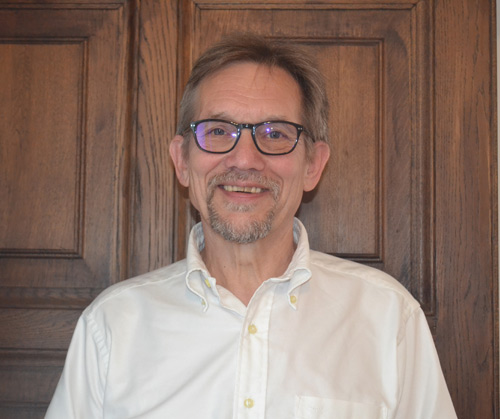
Some of Bob Jessop's models have been used and are still being used in the conceptualisation of Gipuzkoa Sarean, which includes one of his main objectives to improve territorial governance in the region of Gipuzkoa. At the beginning of September, Jessop participated as an expert in “Collaborative open governance. Models of governance. Trends and experiences”. The objective of this UPV summer course, organised together with the Provincial Council of Gipuzkoa, was to reflect on the present and future of governance. The course included the participation of experts and policy makers from all around the world, including Miren Larrea, researcher at Orkestra, whose presentation mainly included learnings from Gipuzkoa Sarean. In that context, we took advantage of the occasion to talk to Jessop about governance and reflect on the different discourses that were giving during the summer course.
How would you briefly describe the governance?
Governance is actually a very complicated term. I distinguish four main modes of governance: the anarchy of exchange on the market, which sometimes fails with disastrous results; the hierarchy of command and control, a good example of which would be the state or formal organisations; solidarity, based on trust and loyalty, and the mutuality of sacrifice, something important in small communities but harder to achieve at the global level; and then there is the ‘normal’ meaning of governance in its restricted sense that is being discussed at this conference under the rubric of collaborative governance. This mode is a form of reflexive self-organisation based on negotiation, networking and efforts to reach mutual understanding and shared goals. So governance, as it is generally understood, is just one of the four modes.
Why is it so important?
We live in a hypercomplex world and we always have to reduce that complexity in order to be able to go on within it. But there are many ways to reduce complexity. Sometimes the market is a very good way of solving distribution problems but it also produces enormous inequalities of wealth and income. Sometimes it may generate crisis. Yet I think that, for routine purchases, we’re quite happy that the market is there because it saves time and solves many day to day problems we might otherwise encounter. Likewise, sometimes we can only solve problems through collective action and delegate authority to somebody to act on our behalf, which is one function that democratic government can provide. Sometimes problems are so complicated that no single actor or organization knows enough about to solve it. Here we can draw on the wisdom of crowds, share our understandings and exchange knowledge. No agents at the beginning can assume that they know best; they need to reach a collective agreement through continuing dialogue. None of those methods of managing problems is going to be fit for every purpose: there’s no one size-fits-all solution. In addition to these four modes of governance, there is another level, which I call the meta-level: this involves striving for the appropriate balance among these modes of governance at any point in time in any given society: how much market, how much fate/faith, how much solidarity, how much reflexive self-organisation? Over time, it’s been apparent that markets are failing more often, even though neoliberals usually deny this; that the state fails more often even though politicians usually say “trust me, I’m different”. This opens space for reflexive self-organisation as a “third way” and for efforts to find the right balance among markets, states, and networks.
What would you underline about the debates that are taking place in this course?

I liked very much the initial meeting that we had with some local politicians before the conference started. I was very impressed about how self-reflexive and self-critical they were. Possibly it’s easy to be self-critical when you’ve only been in power for a year and you can blame the failures of politics on the outgoing politicians. But the emphasis on learning has impressed me. In addition, I’ve been impressed with the naïve optimism of recommendations from some paper givers at the conference solutions. Speakers are coming with something that has worked for their partners in one region and presenting this to us as a template, a one-size-fits-all solution without looking at its limits. Governance is often being presented to us as a technical solution to a technical set of problems. Yet governance is always political. So when we hear a former US deputy of state on the virtues of global social partnership, he doesn’t tell us that, were we to visit the website of the Department of State on Global Social Partnership, we would learn that this approach is subordinated to the changing defence and diplomatic priorities of the United States. Or when we hear about civic action in Toronto, we are not told that this is business looking for cheap solutions to problems that business alone and/or the state alone can’t solve. And we hear about “neutral sandboxes” but not about how people actually get selected to play in that arena. So I think some paper presenters are sometimes depoliticising governance and not giving it its truly political significance. I don’t mean by that it has to be a clear party political significance but we have to reflect on the wider political implications of choosing one method of governance over another. And that’s not being discussed. In contrast, I have just now left a presentation of Daniel Innerarity and, although he has a more philosophical approach, I think his emphasis on self-governance and recognising the limits of relying on one method is interesting.
You mentioned you saw some connections between your work and Miren Larrea’s presentation yesterday. Could you explain what you meant with it?
Yes, very easily. If one thinks about governance, it always takes place in space and time. It’s not out of space, it’s not out of time. Therefore any discussion of governance needs to be sensitive to the spatio-temporal time dimensions of governance: is it that of a region, a neighbourhood, a town, a province, something bigger – and over which time horizon? Are we talking about the governance of a cross-border region like San Sebastian-Biarritz? How do you deal with these cross-border relations? And if one looks to many of the points that Miren was making about territorial management, I would extend these insights to spaces, networks and places and their relation to territories. So the effective governance of Gipuzkoa is not just a question of the province, it’s a question of the political relationship among different places. It has to do with the relationship with Navarra, and further; it’s to do with trade relations, particular civil society groups as well as business organizations. So the similarities that I found included the very strong emphasis on the inherently spatio-temporal nature of governance. And a lot of that gets ignored in the debates. I think this could be an interesting area for future cooperation.
Check Bob Jessop's work at http://www.bobjessop.org