Interview: Andoni Egia, member of the Beterri development agency.
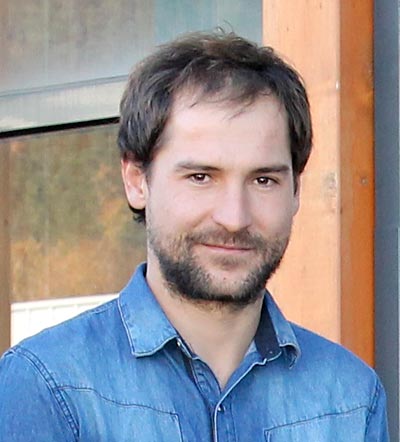
In March of this year the Beterri development agency was formed in Buruntzaldea, with the goal of promoting socioeconomic development and guaranteeing the wellbeing of the citizens of Andoain, Astigarraga, Hernani, Lasarte, Urnieta and Usurbil. Andoni Egia is a member of this development agency.
Since 2013 he has worked on the research and creation of networks in order to form this agency, together with mayors and specialists from the above municipalities. Furthermore, he has been an active participant in the Gipuzkoa Sarean project, as a member of Eskualde Arteko Mahaia and of the action research process for facilitators.
What led you to create the Beterri Development Agency?
There have been many reasons to create the Beterri Development Agency. You have to bear in mind that within Gipuzkoa, Buruntzaldea was the only region that didn't have any kind of structure to manage socioeconomic development, and that poses difficulties in order to receive and manage help coming from higher administrative levels (local council, Basque Government or European Union).
Furthermore, this multidimensional structural crisis (economic, environmental, of care, of values) places us at the beginning of a new historical cycle; and it's extremely important that public authorities carry out critical revision in light of this situation of what they've been able to do up to now, in order to be able to respond to citizens’ specific needs and demands. Therefore, we've created this new integral development agency to mitigate the suffering that this crisis is causing and, furthermore, transform this socioeconomic system that has brought us to this emergency situation, with the aim of it being a more just, more sustainable, and more participatory system.
What are the agency's goals and how are they to be achieved?
As we've said, and according to all the serious critical analyses carried out, the normal role of this socioeconomic system based on economic growth, on the intensive use of energy, on the exploitation of relocated labour and on the discrimination of women has been the one that's brought us down this one-way alley. Because of all that, the main goal of this agency is to look for and find new routes to overcome this social emergency situation, different to those used up to now.
In particular, we're seeking to create new paradigms of development, drawing on cooperation and solidarity, and leaving notions such as growth and productivity, which we consider to be outdated and even risky, in the background, because in a finite territory we can't grow indefinitely.
The means and methodologies to achieve this goal will also be innovative: the basic concepts on which this model will be built are diversity, collective intelligence, equality, participation, knowledge and social innovation.
What influence does and will Gipuzkoa Sarean have on this initiative?
My participation in Gipuzkoa Sarean has been key in Buruntzaldea’s structuring process and in the creation of the Beterri Development Agency.
To begin with, the training sessions received have been of great help to learn about and go in depth into the ideas and methodologies related to territorial development. Moreover, as a participant in this research action process I've been able to meet experts and heads of other agencies and see what projects they have and how they’re working on them, what difficulties they've had, what their successes have been… Furthermore, the quality of instructors and their interest and dedication have been excellent. Therefore, there's no doubt that throughout this whole process Gipuzkoa Sarean's participation has been crucial.
Are you using any part of the new relationships model that is driven from Gipuzkoa Sarean in order to tighten the relationships between the agents of your region?
Of course. Our development agency's government model is based on a relationship model from bottom to top. Although we're still in the structuring phase, it is very important to us that the subjects of development are the region's different agents. We've identified three groups of agents: public authorities, economic agents, and social agents. Public authorities have to guarantee public ownership of resources meant for development, so that everybody, regardless of social class, origin or sex, has the right to use these resources. Furthermore, social and/or community agents, as a whole, have to show the strategic direction of the development plan, because the people of the region are the foundation and the target of this plan. Therefore, they much identify what their needs and what their desires are. Finally, the economic agents have to carry out the strategic direction defined by the community, and create and distribute economic value. In this way, we want to initiate a process whose aim will be to strengthen and extend a development model based on sustainable human development.
You took part in Eskualde Arteko Mahaia and in the research action process of the facilitators in Gipuzkoa Sarean. Turning to what was learnt in this process, what it the most important lesson, in regards to territorial development?
Yes, that's right, I took part in both processes and I'd like to stress that it was very rewarding, because I was able to see and experience, from different levels, what the offices do and the challenges that they're facing. I think the best practical lesson has been the process of drawing up energy and development decrees. The decree has been drafted in a participatory manner, and we've all been able to see how important it is to bear in mind interest groups affected by our activities. Ultimately, these interest groups have to move from being the object of our activities to being the subject. They (in this case, the representatives of the development agencies of each of the regions in our territory) know better than anyone what is needed and how to answer those needs. Furthermore, we've used a method that can be applied to our region as much as the rest, because the decrees were drawn up according to our interests and needs.
How would you assess the work carried out by Gipuzkoa Sarean during this period? Do you believe they've helped to strengthen the territory's development? What parts would you improve?
The work carried out at Gipuzkoa Sarean and the relationship model that is behind this experience are unbeatable and very appropriate. The theoretical work has been very intense, and in this respect, I would stress the work undertaken by Orkestra. We've learnt about and analysed the experiences of other countries, for example of Argentina, with ConectaDEL, and, in particular, of Rafaela, by the hand of Pablo Costamanga.
This theoretical part, carried out especially on the training process of facilitators, has had a large link with the practical part, focused especially on Eskualde Arteko Mahaia. The fact of having participated in the two processes had offered me the possibility of combining the theoretical and practical aspects and, therefore, of seeing the process in its entirety.
Finally, I'd like to underline that I believe that this development and relationship model proposed by Gipuzkoa is suitable, because it is based on the empowerment of bodies and players from the whole territory. These players must be key in any development process, as they are the ones who live in the territory and know which points have to be strengthened and which have to be corrected. Furthermore, the decentralisation of the decision-making power offers the possibility of building a democratic, more balanced, sustainable and fair development model. Therefore, as I said at the beginning of the interview, within Gipuzkoa Sarean we’ve worked on the way to unravel some of the challenges faced by future development plans; for that it's necessary to start from today with processes built upon these foundations.