26 January 2026
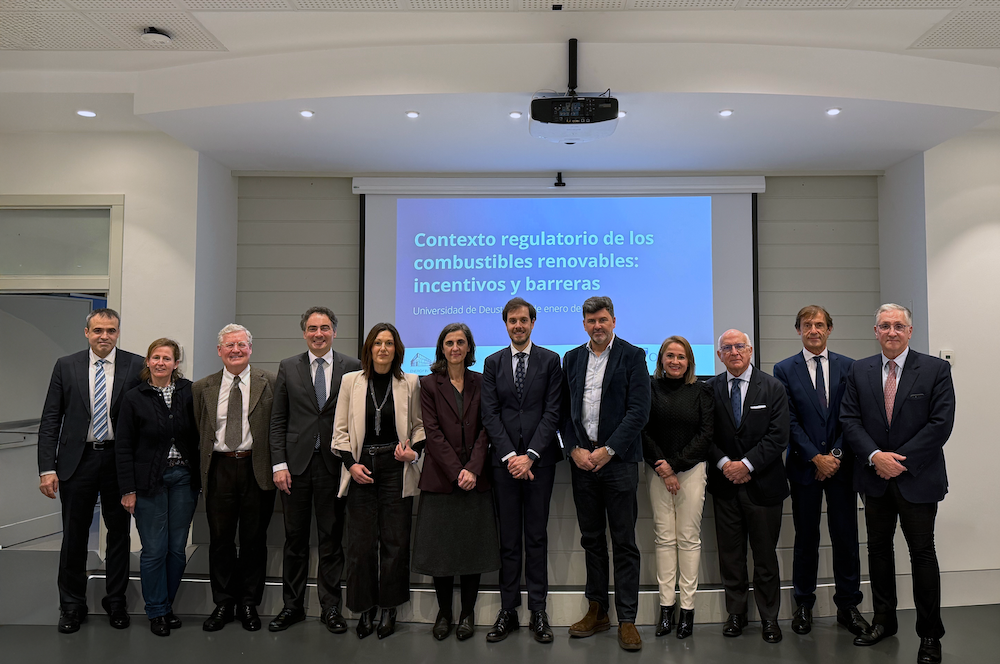
- Over 60 energy sector professionals gathered at the University of Deusto for a debate forum on the regulatory challenges facing renewable fuels.
- Representatives from the Ministry for Ecological Transition and Demographic Challenge, the European Commission and the European Parliament were in attendance, among others.
- This is the first in a series of three forums to be held throughout 2026, addressing relevant and topical energy issues.
Orkestra collaborated with Petronor and the Energy Intelligence Centre (EIC) to launch a new series of discussion forums analysing key challenges in the development of renewable fuels.
The first forum, held at the University of Deusto's Bilbao campus, brought together over 60 professionals and focused on the regulatory context of renewable fuels. It addressed the incentives and barriers that influence their development at both the European and Spanish levels.
Emiliano López Atxurra, President of Petronor, opened the session by emphasising the importance of creating spaces for shared reflection between institutions, businesses and academia, in order to advance the decarbonisation of the economy while addressing the challenges of competitiveness and security of supply.
The conference then continued with a presentation from Brussels by Yolanda García Mezquita, Head of Unit at the European Commission's Directorate-General for Energy. She provided an overview of the European energy security context, as well as the main debates surrounding the implementation of the Renewable Energy Directive (RED III) and the role of renewable fuels in the energy transition.
This was followed by a session analysing European renewable fuel regulation, featuring David Robinson, Senior Research Fellow at the Oxford Institute for Energy Studies, and Iñigo del Guayo, President of the Spanish Energy Law Association (AEDEN). They provided legal and economic perspectives on the incentives and constraints that affect the deployment of these technologies. The debate was moderated by Mónica de la Cruz, Director General of CRECEMOS.
To contrast the various political approaches to the regulation of energy and renewable fuels in Europe, the conference featured a roundtable discussion with MEPs. The participants were Javier Zarzalejos (European People's Party), Nicolás González Casares (Group of Socialists and Democrats), and Oihane Agirregoitia (Renew Europe–PNV). Joseba García Garaigordobil, Director General of the Energy Intelligence Centre, moderated the debate.
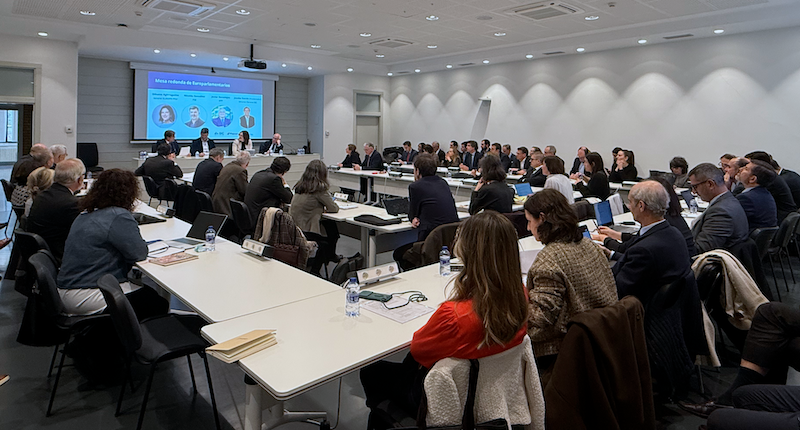
The second session of the forum focused on analysing the draft Royal Decree on promoting renewable fuels and decarbonising transport. The session addressed the conditions necessary for these regulatory instruments to effectively contribute to the development of the sector. The session featured Berta Cabello (Director of Renewable Fuels at Repsol) and Oliverio Álvarez (Partner in charge of Energy, Resources and Industry at Deloitte), and was moderated by Aitor Arzuaga (CEO of Alba Emission Free Energy).
Iván Martén, Chairman of Orkestra, summarised the main messages and conclusions of the forum, after which José Luis Cabo Sánchez, Deputy Director General of Hydrocarbons and New Fuels at the Ministry for Ecological Transition and Demographic Challenge, delivered the closing remarks.
Renewable fuels: a necessary step towards decarbonisation
Based on contributions made at the conference, Orkestra has produced a summary document (in Spanish) bringing together the forum's main conclusions and key messages shared by participants. The aim is to contribute to public and regulatory debate on renewable fuel development.
The main conclusions include:
- The key role of renewable fuels in advancing decarbonisation in sectors that are difficult to electrify, such as heavy transport, air transport and maritime transport, as well as certain energy-intensive industries.
- The need for a clear, stable and long-term regulatory framework that provides demand signals and encourages investment, based on principles such as technological neutrality, security of supply and strategic autonomy.
- Spain's potential to become a European benchmark in the development of renewable fuels, with an aligned regulatory framework (RED III Directive and the future Royal Decree on promoting decarbonisation and renewable fuels).
This was the first of three forums planned for 2026, aiming to address relevant and topical issues surrounding the decarbonisation of the economy and the role of renewable fuels from a multidisciplinary perspective. The meetings will contribute rigorous analysis to the debate on the main regulatory, economic, and territorial challenges associated with the energy transition.